 Yurlie
Technical Guides, Cloud Architecture & Standards
In-depth guides for software engineers, DevOps, and cloud architects covering networking, data serialization, security, and developer utilities.
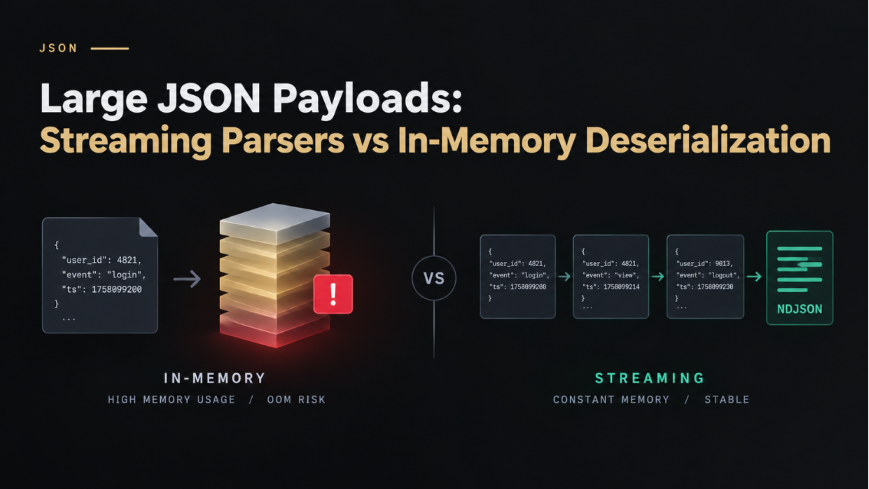
Large JSON Payloads: Streaming Parsers vs In-Memory Deserialization
Compare streaming JSON parsers (Jackson, ijson, Go json.Decoder) to in-memory deserialization, and see how NDJSON avoids Node.js V8 heap OOM crashes.
What Does 0.0.0.0 Mean? A Practical Guide
Understand what 0.0.0.0 actually means in networking, from default routes to server binding, and why it behaves differently depending on context.
What Is a UUID and When Should You Use One?
Understand what a UUID is, how its versions differ, and when a UUID is the right choice over an auto-incrementing ID for your database.
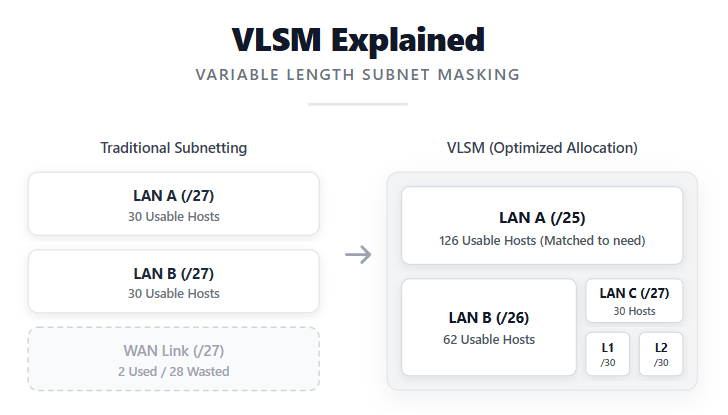
VLSM Explained: Variable Length Subnet Masking
Learn how Variable Length Subnet Masking lets you carve a single network into differently sized subnets, with a full worked allocation example.
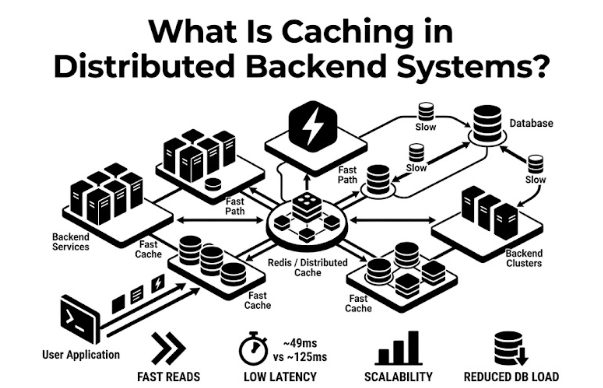
What Is Caching in Distributed Backend Systems?
Understand how caching works in distributed backend systems, from private vs shared cache to cache-aside patterns, TTL, and real performance numbers.
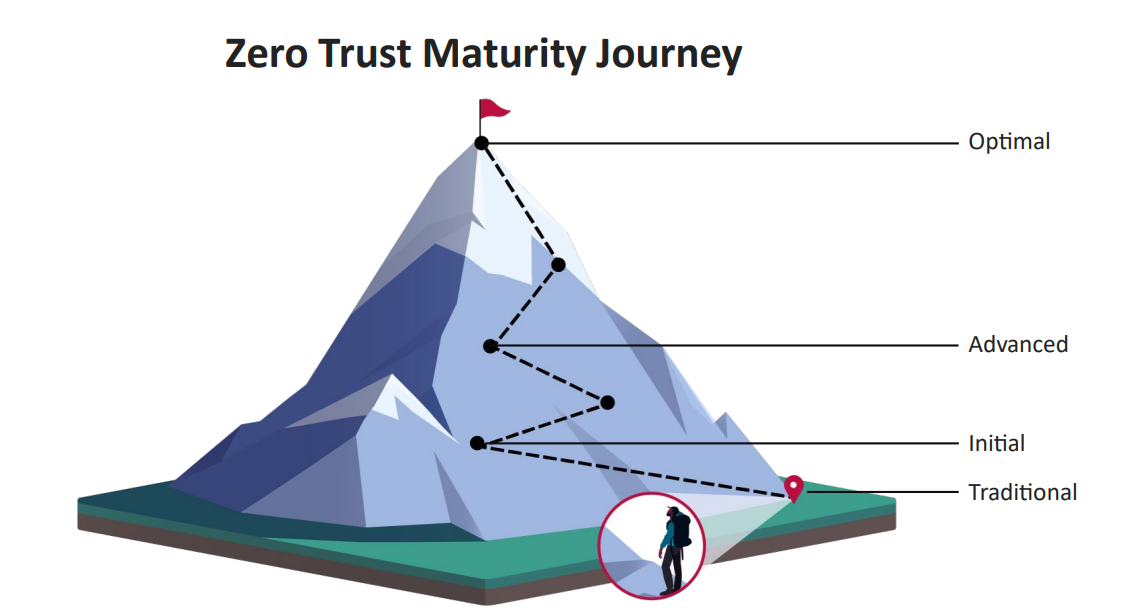
Zero Trust Is Mature on Paper, Not Yet in Practice
CISA and Microsoft's own Zero Trust maturity models converge on the same taxonomy (both traced back to NIST SP 800-207) but disagree on basic structure, one uses 5 pillars and 4 stages, the other uses 6 elements and 3 stages. CISA's own document lists what it doesn't cover (OT, IoT subsets, incident response detail, AI/ML), and Microsoft's own paper admits most organizations still sit at the lowest "Traditional" stage. Real-world evidence backs this up: Gartner projected 75% of federal agencies would miss full zero trust implementation past 2026, DoD had only completed 14% of its 152-task roadmap by late 2024, and the OMB's hard September 2024 deadline quietly became an open-ended metric instead of a completed milestone. Conclusion: Zero Trust is mature as a concept, not yet mature as a practice.
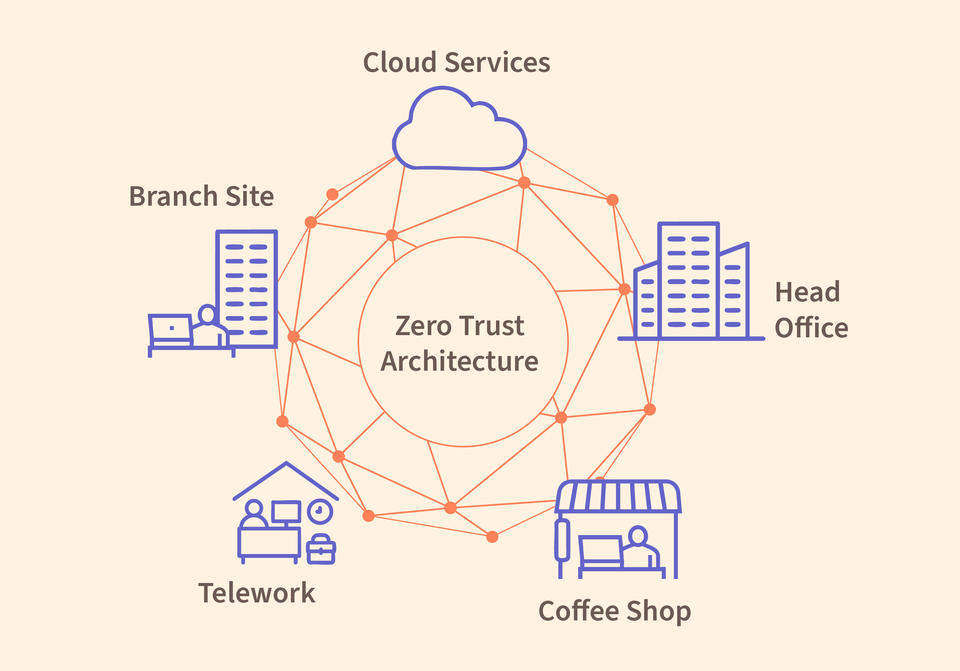
How Far Has Zero Trust Actually Evolved
From early-2000s de-perimeterization to becoming an official standard via NIST SP 800-207 (2020), ZTA research exploded after 2020 but started slowing in 2023-2024, signaling it's approaching a plateau. ZTA has spread into nearly every sector (healthcare, IoT, finance, military, energy), but checked against 9 security dimensions (authentication, authorization, access control, cryptography, etc.), most implementations only touch 3-5 of them. Strongest: authentication and access control. Weakest: automated orchestration, lightweight cryptography for IoT, and regulatory compliance (GDPR/HIPAA).

AWS VPC Subnet Planning: Best Practices for /24 to /28 Networks
Learn how to design scalable Amazon Web Services (AWS) Virtual Private Cloud (VPC) subnet architectures, allocate CIDR blocks, handle IP reservation rules, and avoid IP exhaustion.
UUID v4 vs UUID v7: Why Database Performance Demands Time-Ordered Keys
Discover why random UUID v4 causes severe database B-Tree index fragmentation and read/write degradation at scale, and how time-ordered UUID v7 provides zero-collision unique IDs with sequential sorting.
How to Calculate CIDR Subnets: A Complete Guide for Network & Cloud Engineers
Master Classless Inter-Domain Routing (CIDR), IP range calculations, subnet masks, wildcard masks, and VPC network planning for AWS, GCP, and Kubernetes.
JSON Best Practices: Formatting, Schema Validation & API Security Guide
Learn modern JSON standards for REST & GraphQL APIs, common syntax pitfalls, data typing rules, payload optimization strategies, and schema validation.